Transesophageal echocardiography with dopplerization
About the Examination
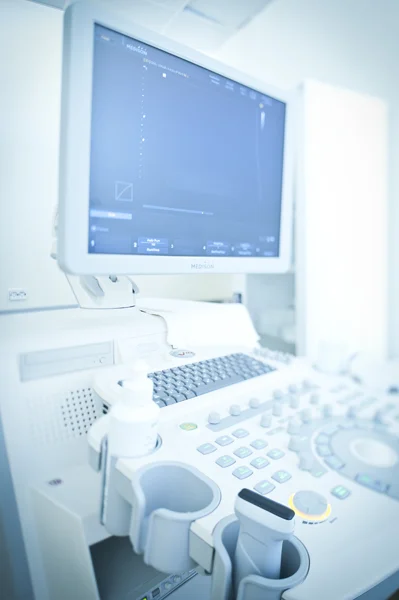
Ultrasound is an advanced, non-invasive imaging method used to examine internal tissues and organs using sound waves. The procedure is quick, safe, and does not cause any side effects. It is performed using an ultrasound machine consisting of a transducer and a monitor. As the transducer is moved across the skin, ultrasound waves are reflected by the body's tissues and converted into electrical signals, which create images on the screen. This allows the physician to visualize internal organs without affecting or damaging the body.
When Is This Examination Recommended?
Ultrasound examination may be recommended to assess the heart, thyroid gland, abdominal organs (liver, gallbladder, pancreas, spleen), urinary system (kidneys, urinary bladder, residual urine), prostate, breasts, lymph nodes, and joints, as well as to investigate various types of pain, lumps, masses, or other abnormalities.
For older adults, a preventive ultrasound examination is recommended once a year.
How to Prepare for an Ultrasound Examination
Abdominal Ultrasound
- Gallbladder examination: it is recommended not to eat for approximately 4 hours before the examination.
- Pancreas and spleen examination:
- Avoid foods that may cause bloating for 24 hours before the examination (such as dark bread, apples, plums, peas, beer, etc.).
- Approximately 8 hours before the examination, take medication to reduce bloating as recommended by your physician or pharmacist.
Urinary System and Reproductive Organ Ultrasound
- Drink fluids before the examination. The urinary bladder should be full during the procedure.
No special preparation is required for other ultrasound examinations.
What Happens During the Examination?
An ultrasound examination may be performed by placing the transducer on the skin over the area being examined or through the body's natural openings.
When performed through the skin, the examination is usually carried out while the patient is lying on their back. Depending on the organ being examined, the physician may ask you to stand up, turn onto your side, or lie on your stomach.
A special water-based gel will be applied to your skin to eliminate the air gap between the skin and the transducer, allowing for more accurate imaging. The physician will then press the transducer against your skin and move it over the area being examined to obtain detailed images on the screen.
When the examination is performed through the body's natural openings:
- During a transesophageal ultrasound examination, the transducer is inserted into the esophagus to obtain detailed images of the heart.
- During a transrectal ultrasound examination, the transducer is inserted into the rectum to examine the prostate gland.
- During a transvaginal ultrasound examination, the transducer is inserted into the vagina to examine the uterus and ovaries.
After the Examination
Your physician will discuss the examination results with you and, if necessary, recommend appropriate treatment.
To see which clinics offer this service and find out the price
Select a city
Doctors providing this service